College Cost Secrets
A bootstrapped financial planning service helping US families reduce college costs through SAI optimization and one-on-one consulting. Developed the subscriber dashboard, financial planning tools, and client portal using React and Next.js. The platform serves families that have collectively saved $100M in college expenses, with a Kevin Harrington endorsement and 15+ years of operation.

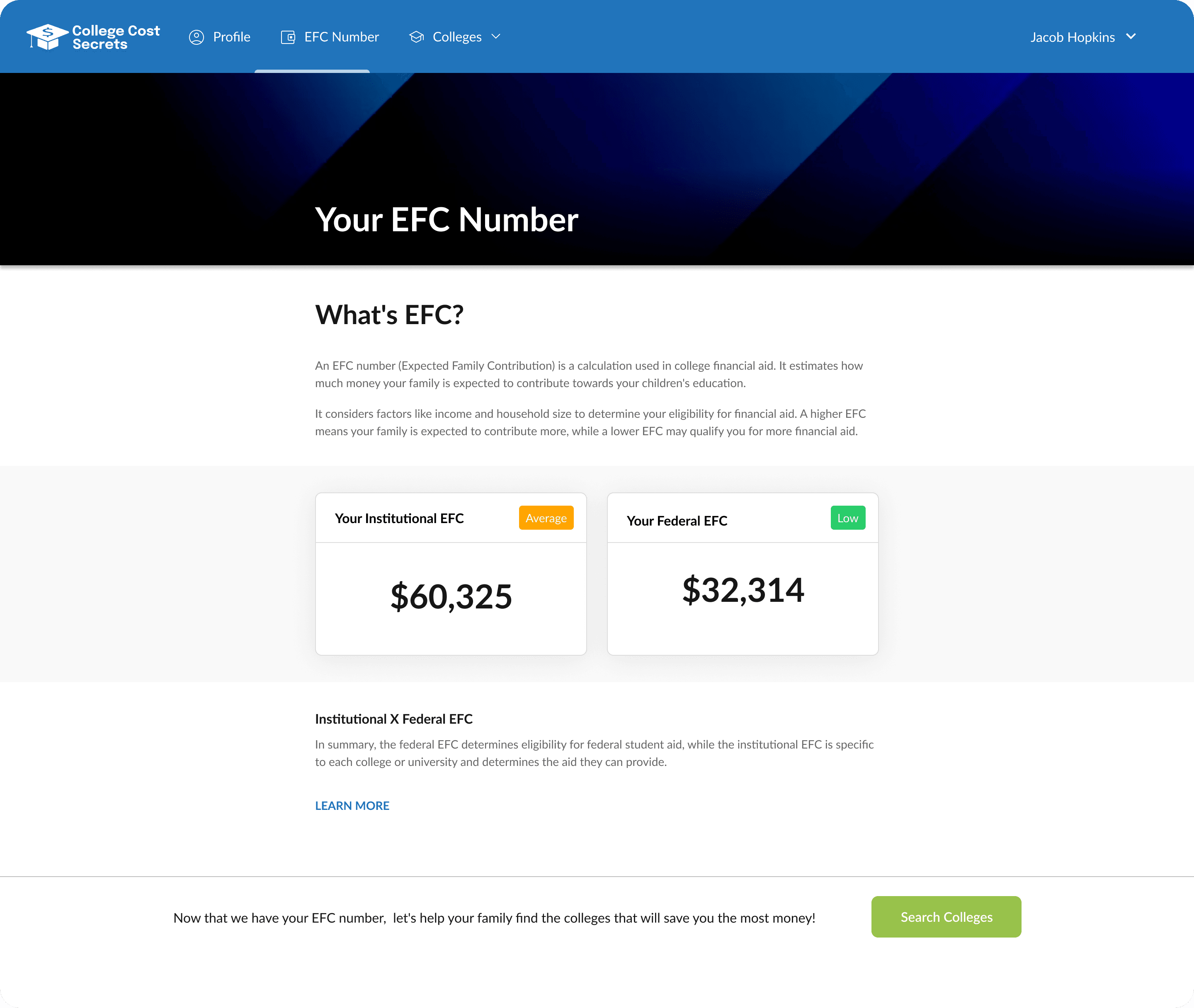
College Cost Secrets is a role-based financial planning platform for US families working out what college will actually cost them. It calculates a household's Federal Student Aid Index from real federal policy rather than an estimate, then lets families search and compare colleges against it — with separate portals for the agents and admissions professionals advising them.
- Role
- Frontend developer
- Status
- Live
The problem
Families cannot easily find out what a given college will cost them, what aid they qualify for, or which schools give the most merit money. The published sticker price is not the answer, and the number that matters depends on a federal formula most people have never seen.
The professionals advising those families — agents and admissions counsellors — have a different problem with the same data underneath it. They need to manage a caseload, not plan a single household.
What the platform does
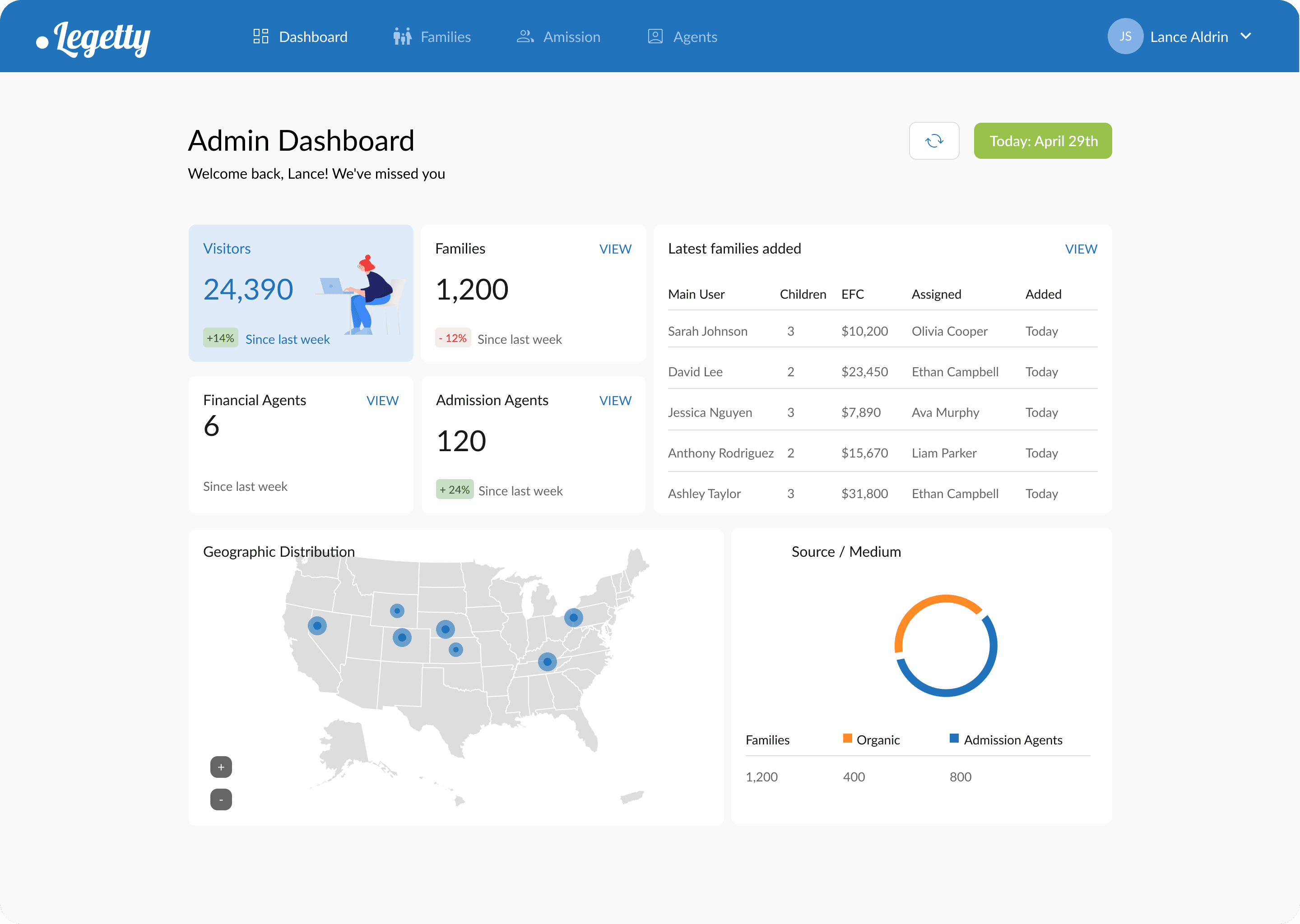
Four user types over one set of financial data: families planning and searching, agents managing families, admissions professionals managing a caseload, and admins overseeing the system.
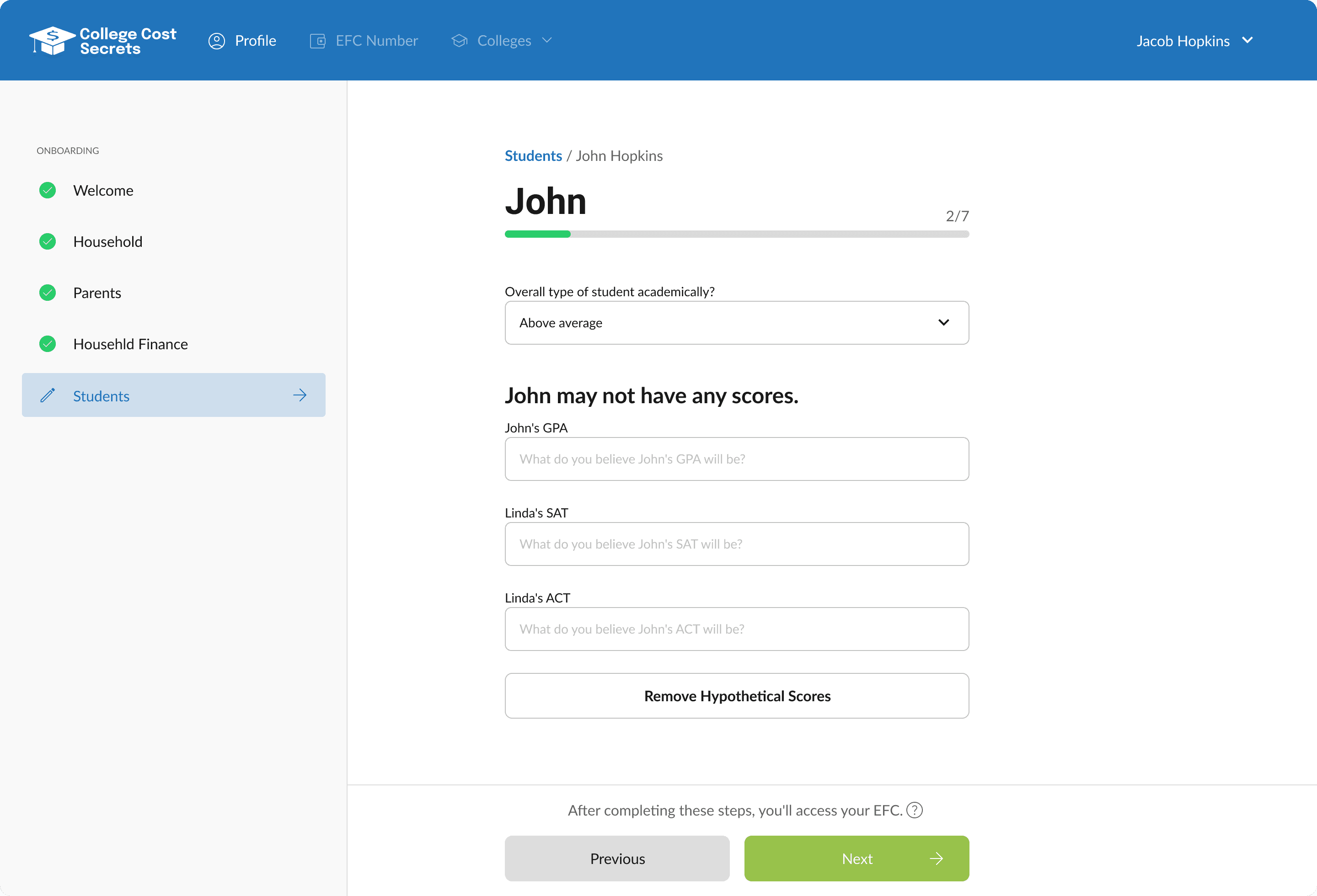
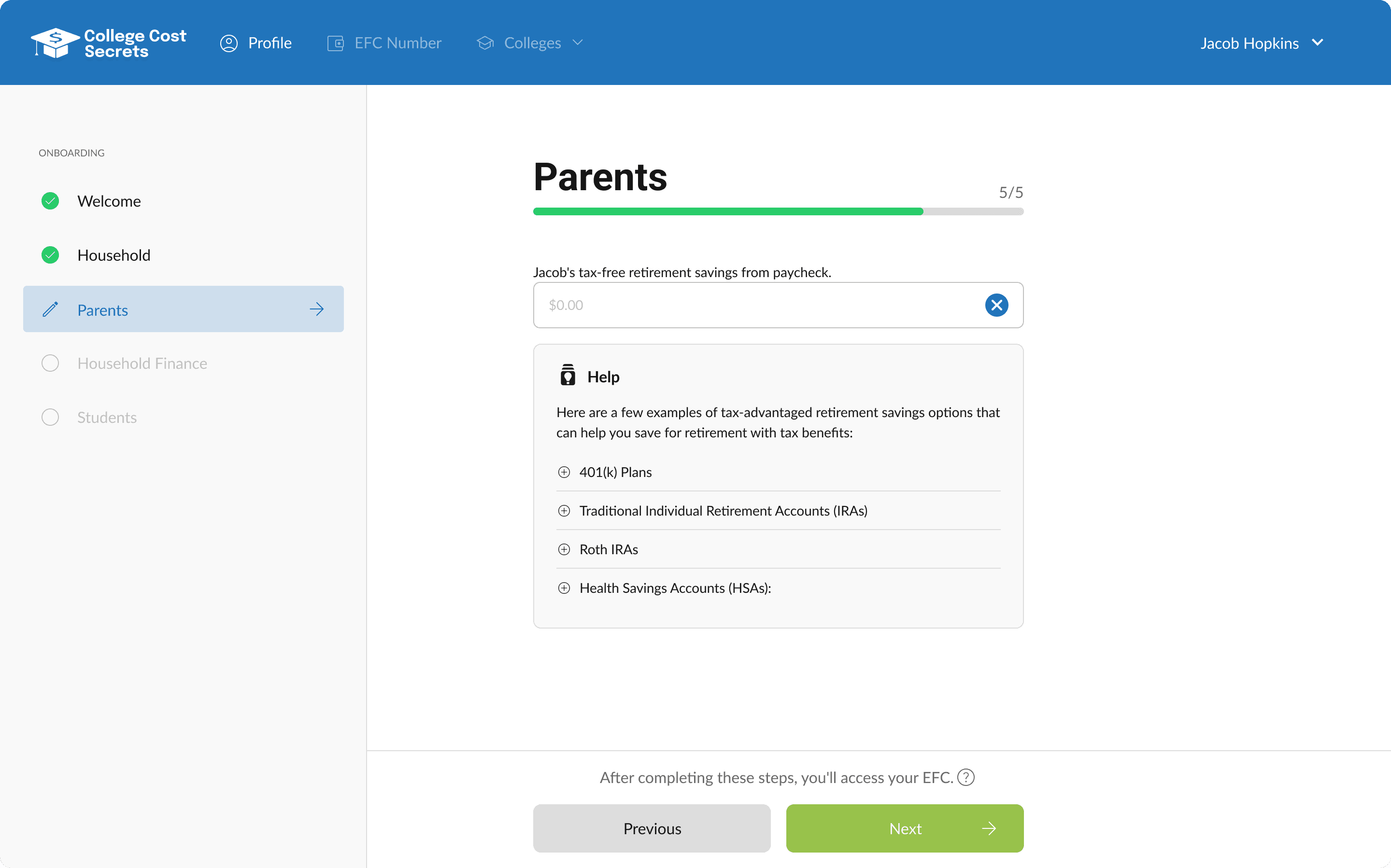
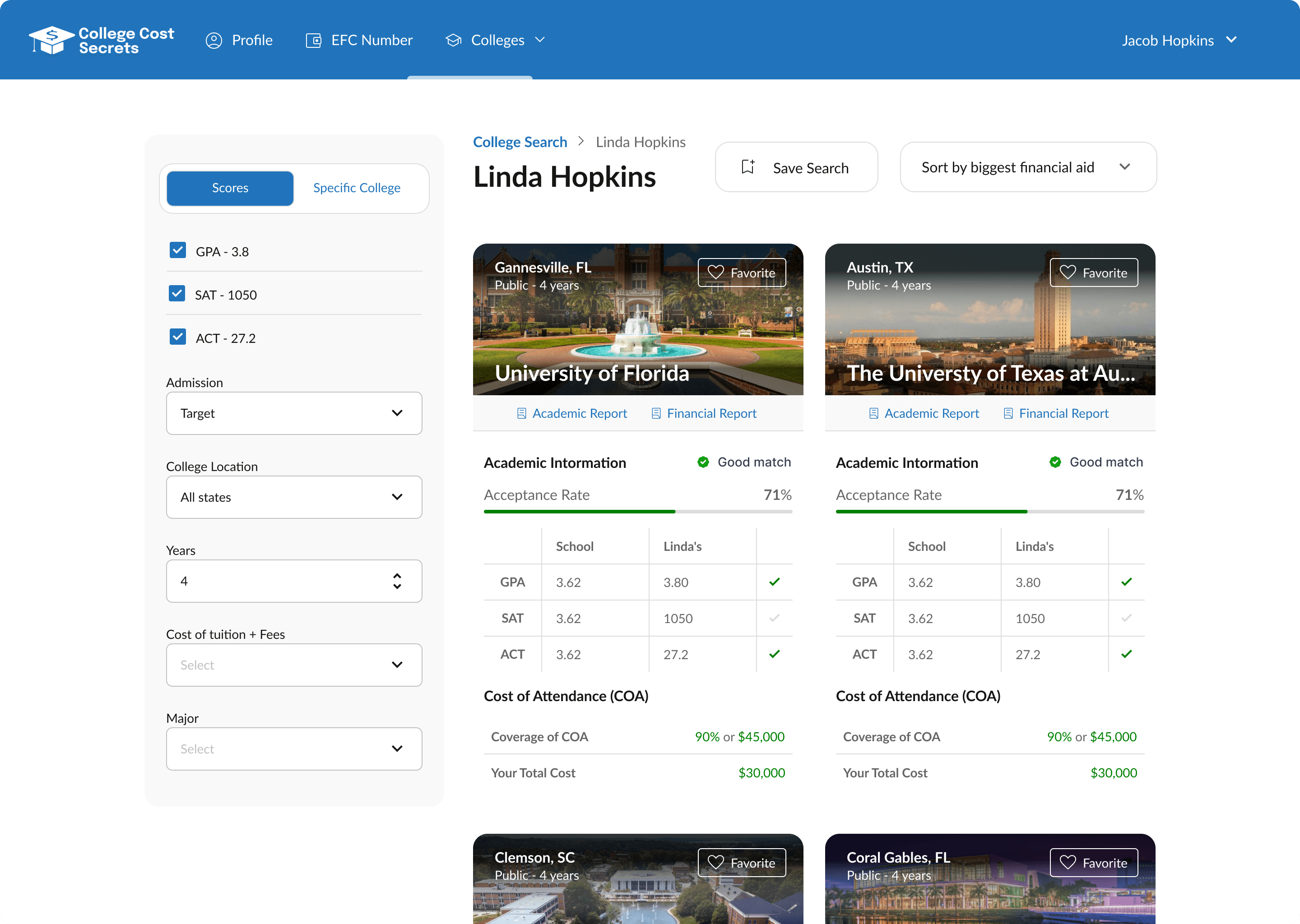
A family works through a multi-step onboarding wizard, receives their calculated aid index, then searches colleges with filtering, favourites and saved searches, compares them side by side, and reads a per-college academic and financial report. Agents, professionals and admins each get a dashboard shaped around their own job.
Built with Next.js and React in TypeScript, with Redux Toolkit for client state and React Query for server state, Firebase behind a next-auth layer, Formik and Yup for forms, Algolia for college search, Nivo and react-simple-maps for the reports, and Sentry and Google Analytics in production on Vercel.
What I owned
I worked on this as a frontend developer, on the React and Next.js side: the subscriber dashboard, the financial planning tools families work through, and the client portal.
The federal aid calculation itself lives behind the API rather than in the front end — the client's job is to collect exactly the inputs the formula needs and present what comes back, which is why the onboarding wizard is shaped the way it is.
Key decisions
Implement the federal formula, not an approximation of it. The product calculates a real Student Aid Index rather than offering a guide to roughly what a family might expect. That single choice shapes everything above it: the calculation becomes load-bearing, and the onboarding wizard exists to collect exactly the inputs the formula requires — no more, and none missing.
The easier product was an estimator. It would have been faster to build, harder to get wrong, and worth much less, because a family comparing colleges on an approximation is making the same decision with worse information.
A Next.js client over a REST API, built around the aid math. The front end consumes an external REST service rather than owning the calculation, which keeps the money maths in one place instead of spread across four portals that each need it.
Technologies
A look inside