Clinic Management System - Cannabiz Elite (Australia)
Cannabiz Elite is a clinic management system purpose-built for Australian cannabis and telehealth clinics. Unlike generic practice management software designed for GPs or specialists, the platform understands the unique operational needs of medicinal cannabis providers. From scheduling and telehealth through to prescription management and dispensary coordination, every feature is tailored to cannabis clinic workflows. This isn't a generic system retrofitted for cannabis — it's cannabis clinic management from the ground up.

Cannabiz Elite is clinic management software for Australian medicinal cannabis and telehealth practices. It replaces the stack a clinic normally assembles — a booking tool, a video link, a prescribing system, a storefront and a pharmacy handoff — with one platform where a patient books, consults, receives a script and orders against it without leaving.
- Role
- Full stack developer
- Team
- At SCSS Consulting
- Status
- Live
The problem
A cannabis clinic runs on tools that were never meant to meet: a scheduling app, a video call, whatever the prescriber writes scripts in, a storefront, and email to the pharmacy. Every gap between them is manual, and every manual step is somewhere a script gets lost or a repeat order never happens.
That is a revenue problem as much as an operational one. A patient who cannot easily reorder against a valid script does not reorder, and a clinic rarely finds out why.
What the platform does
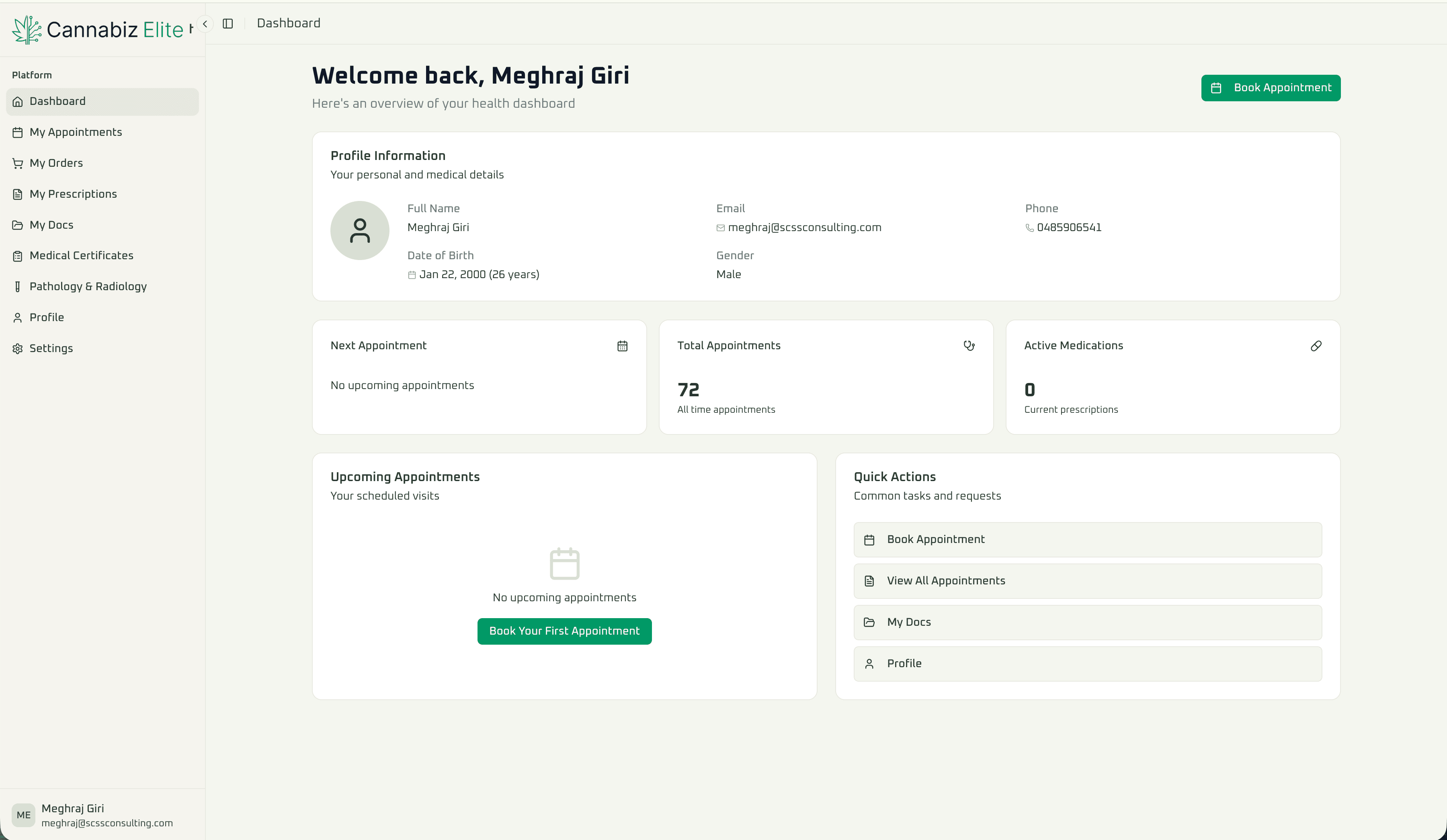
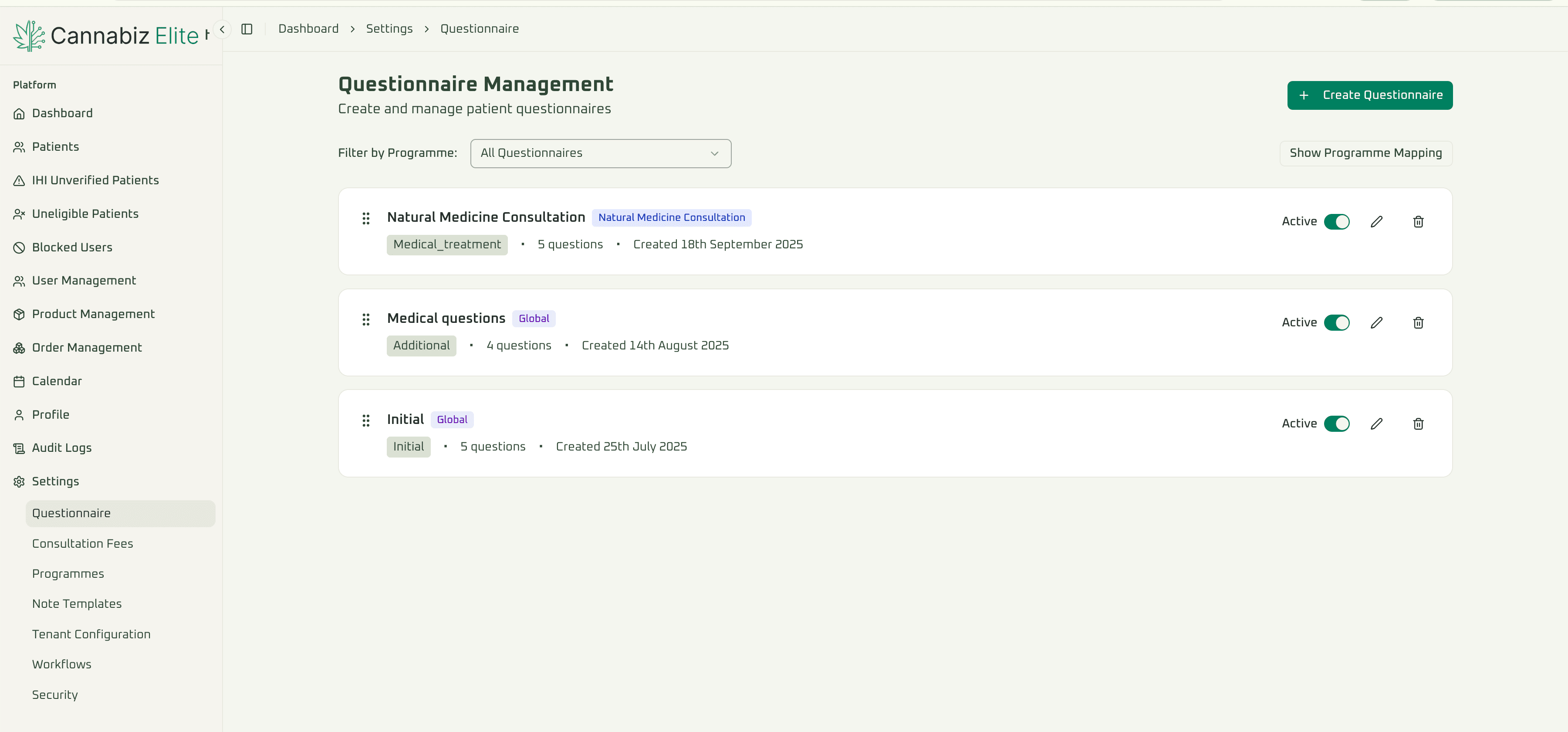
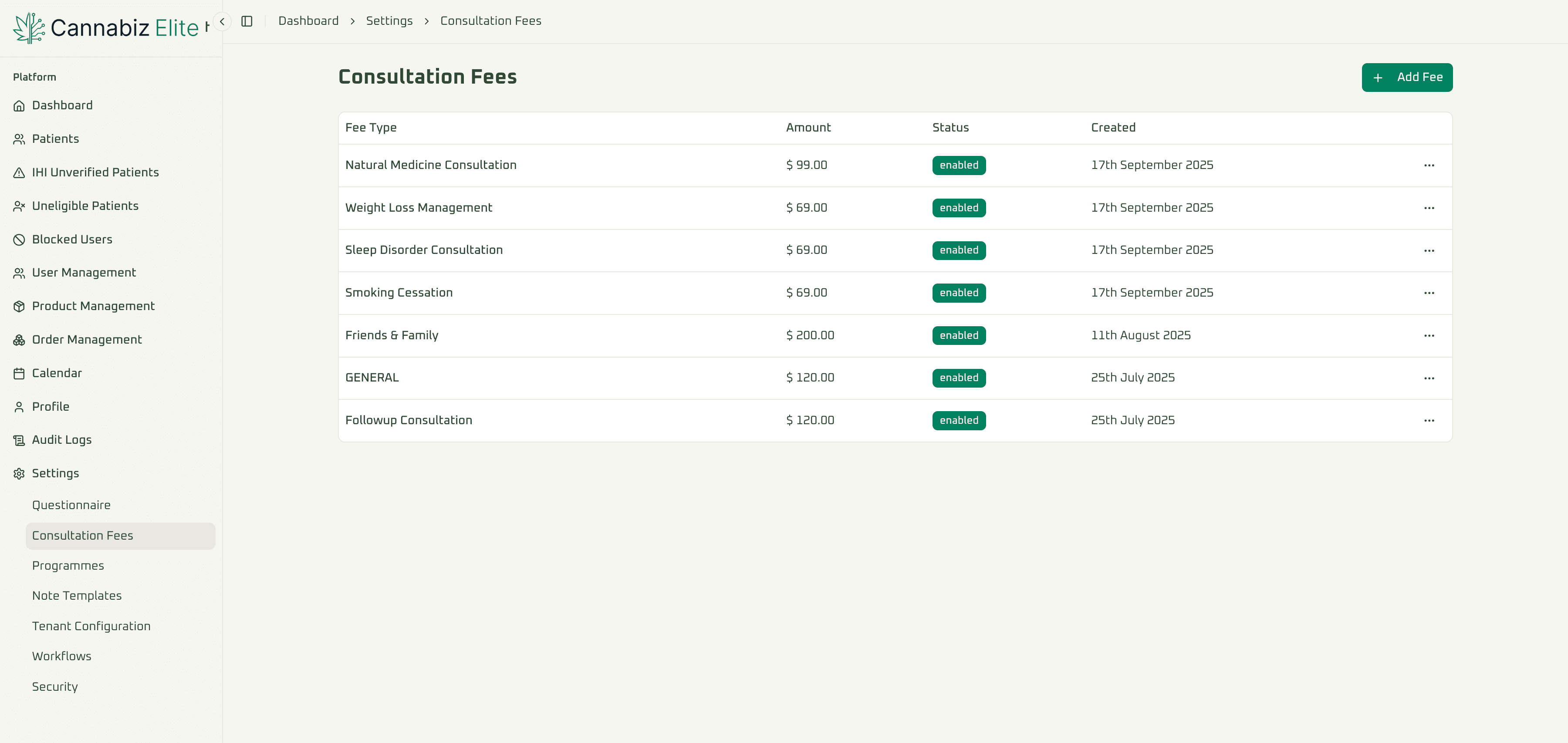
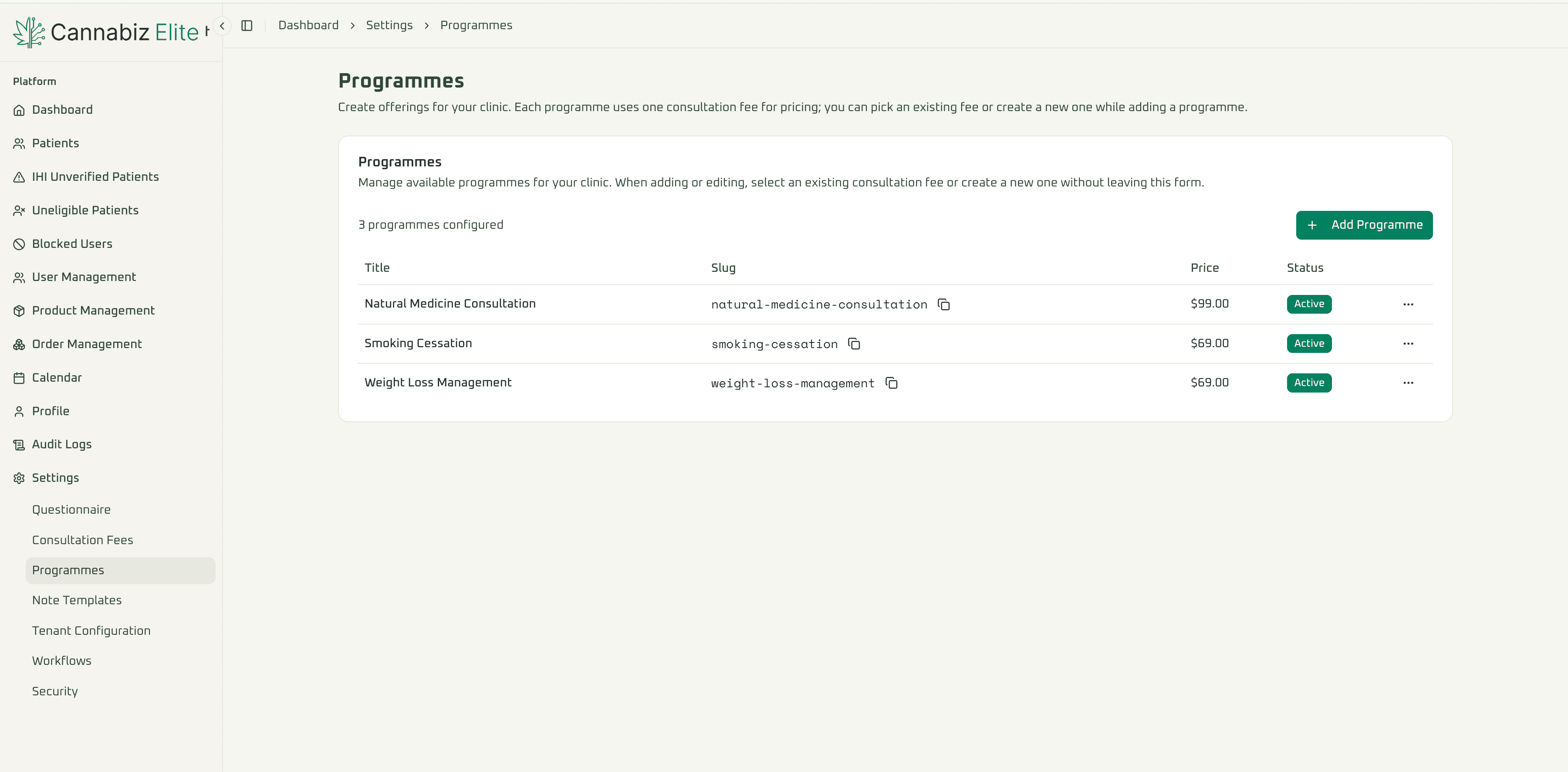
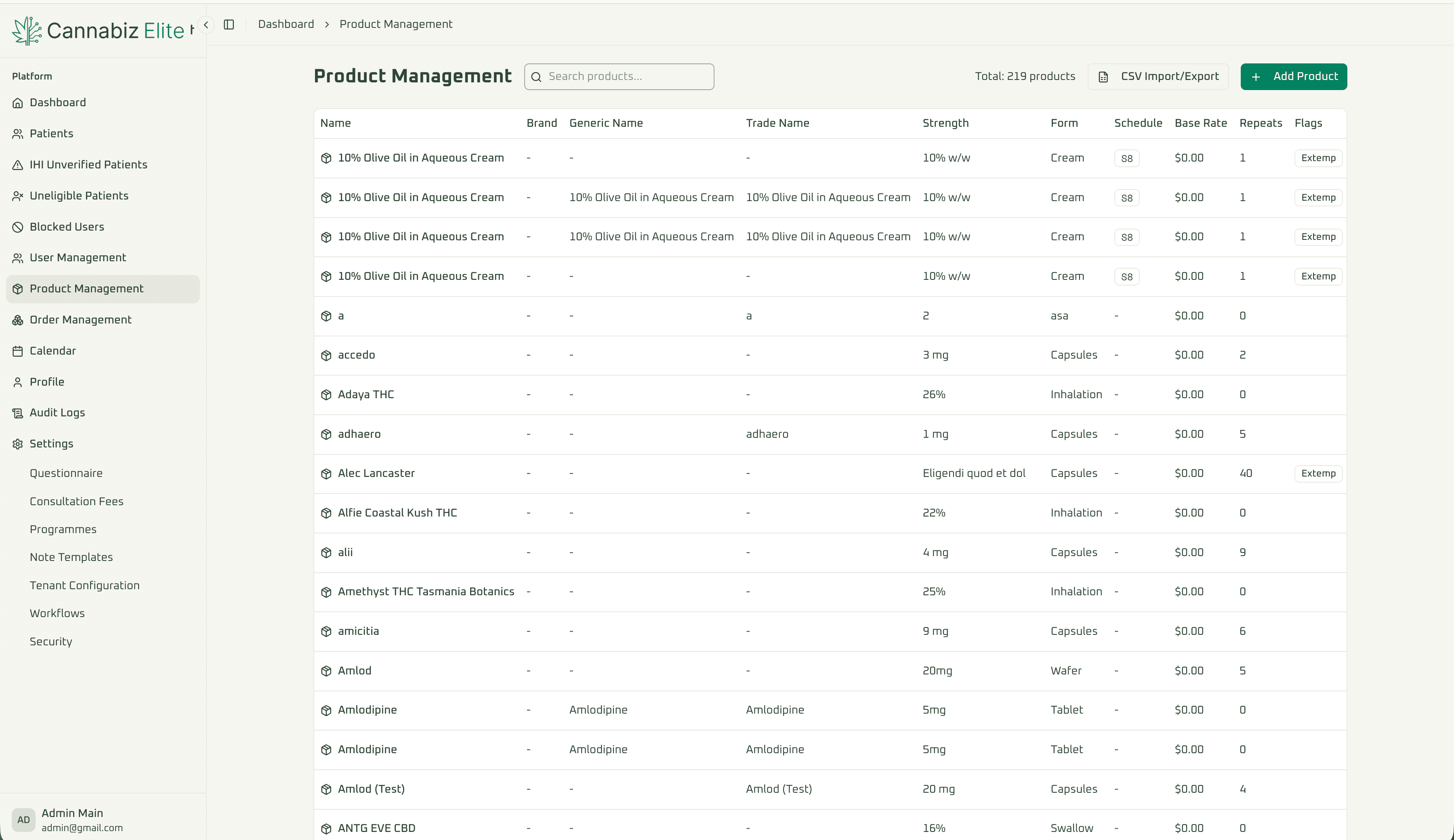
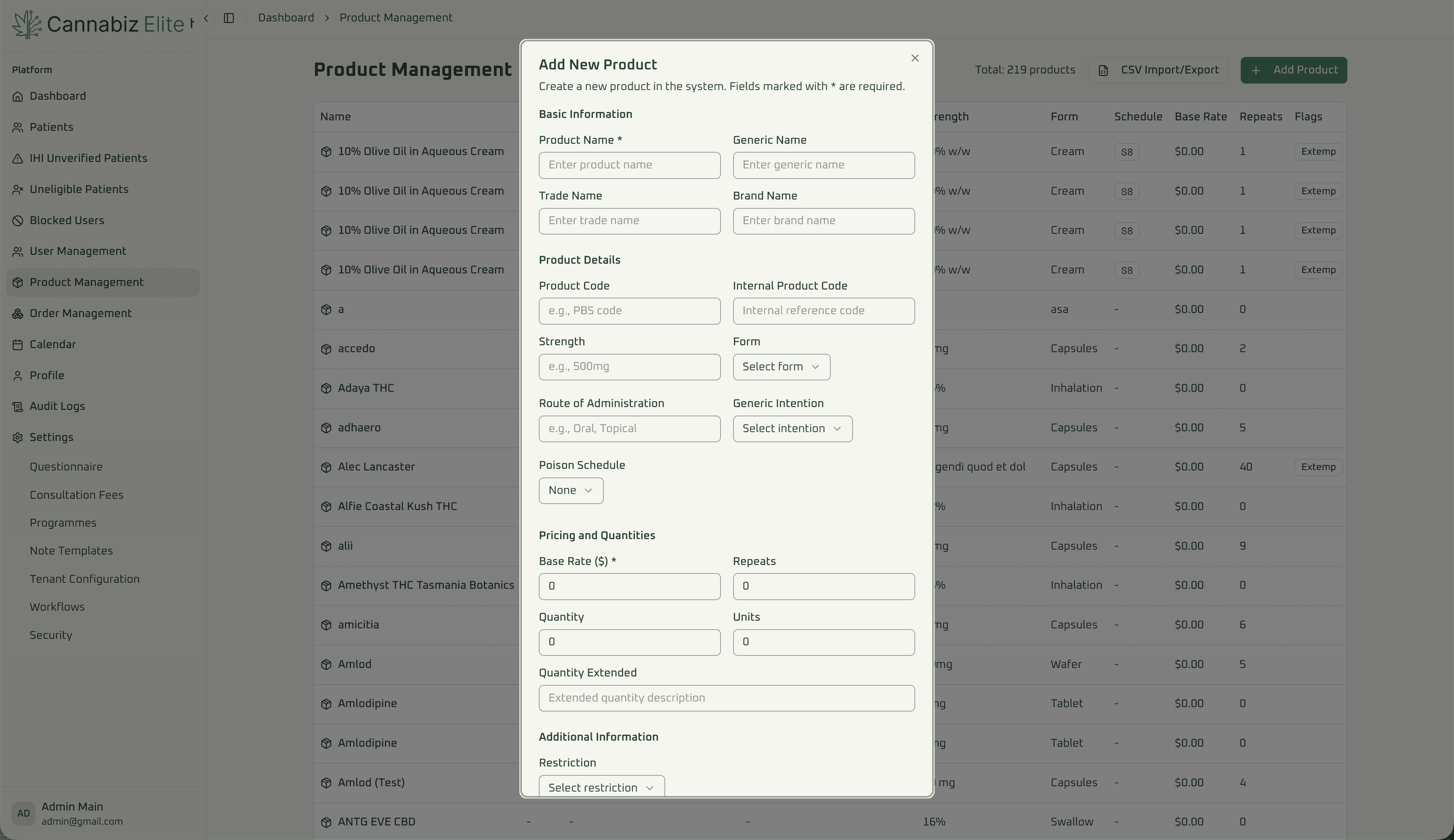
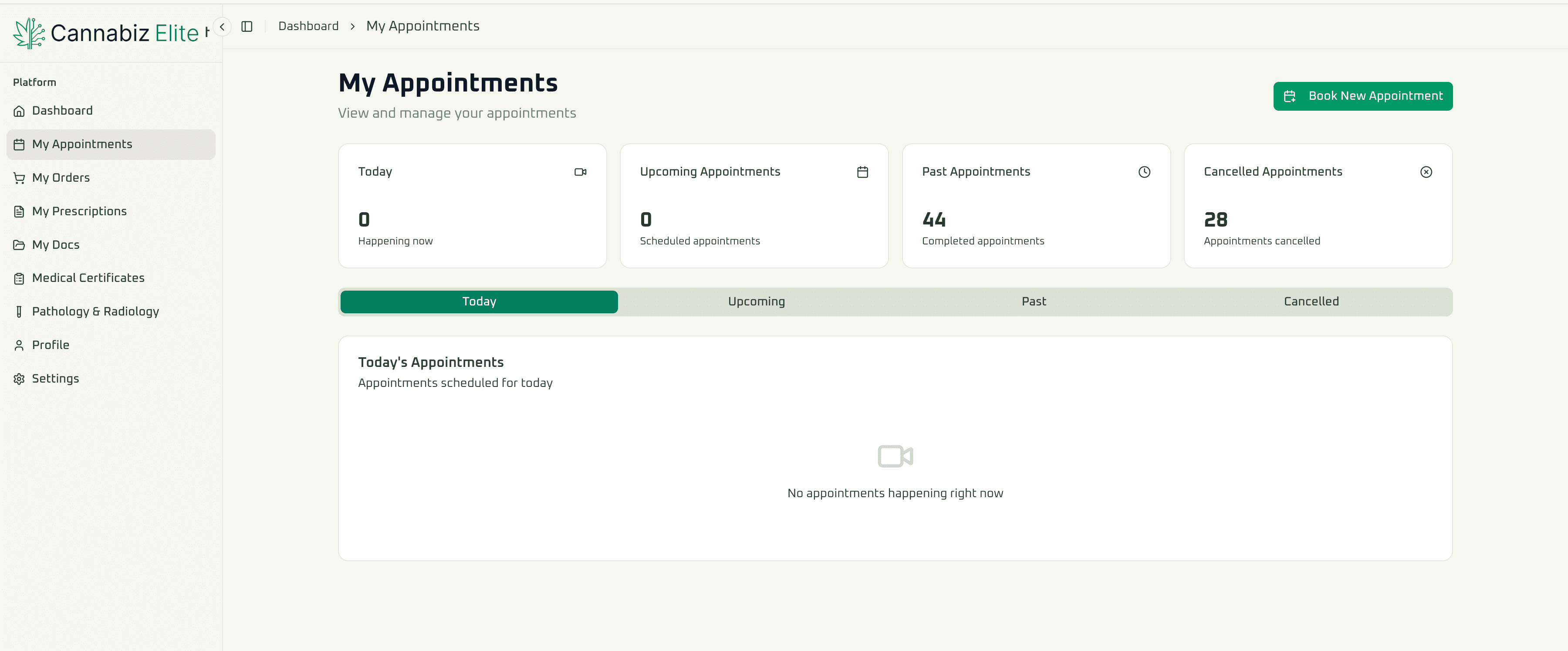
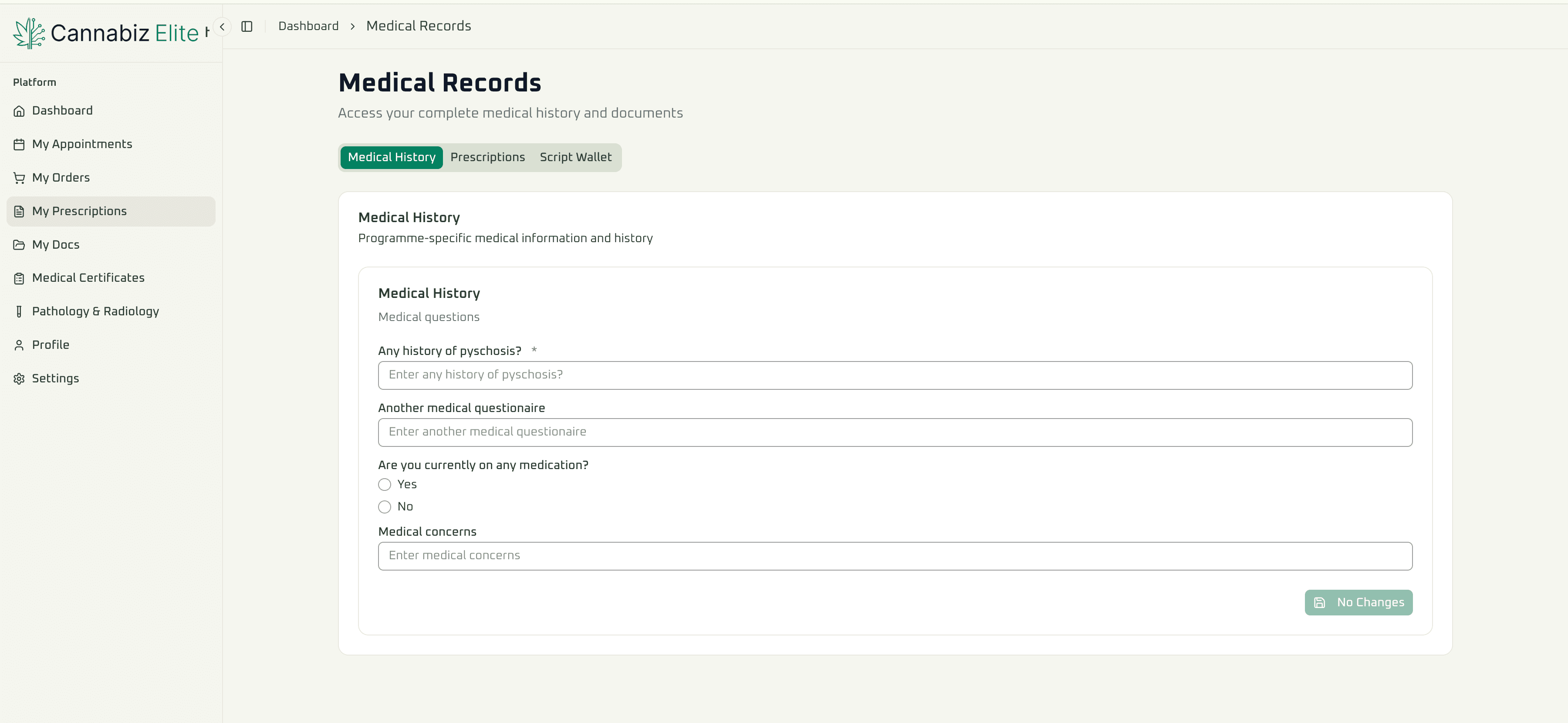
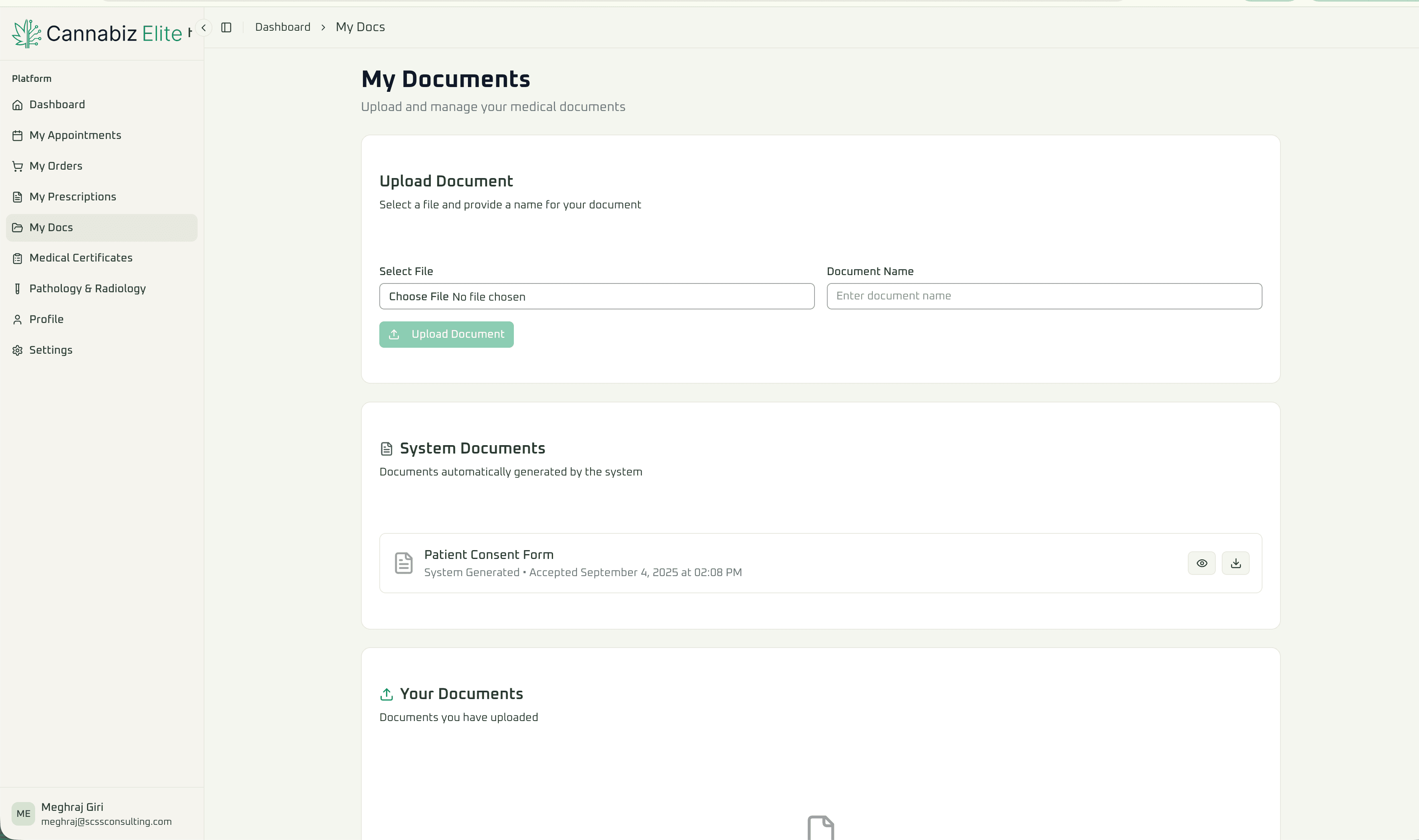
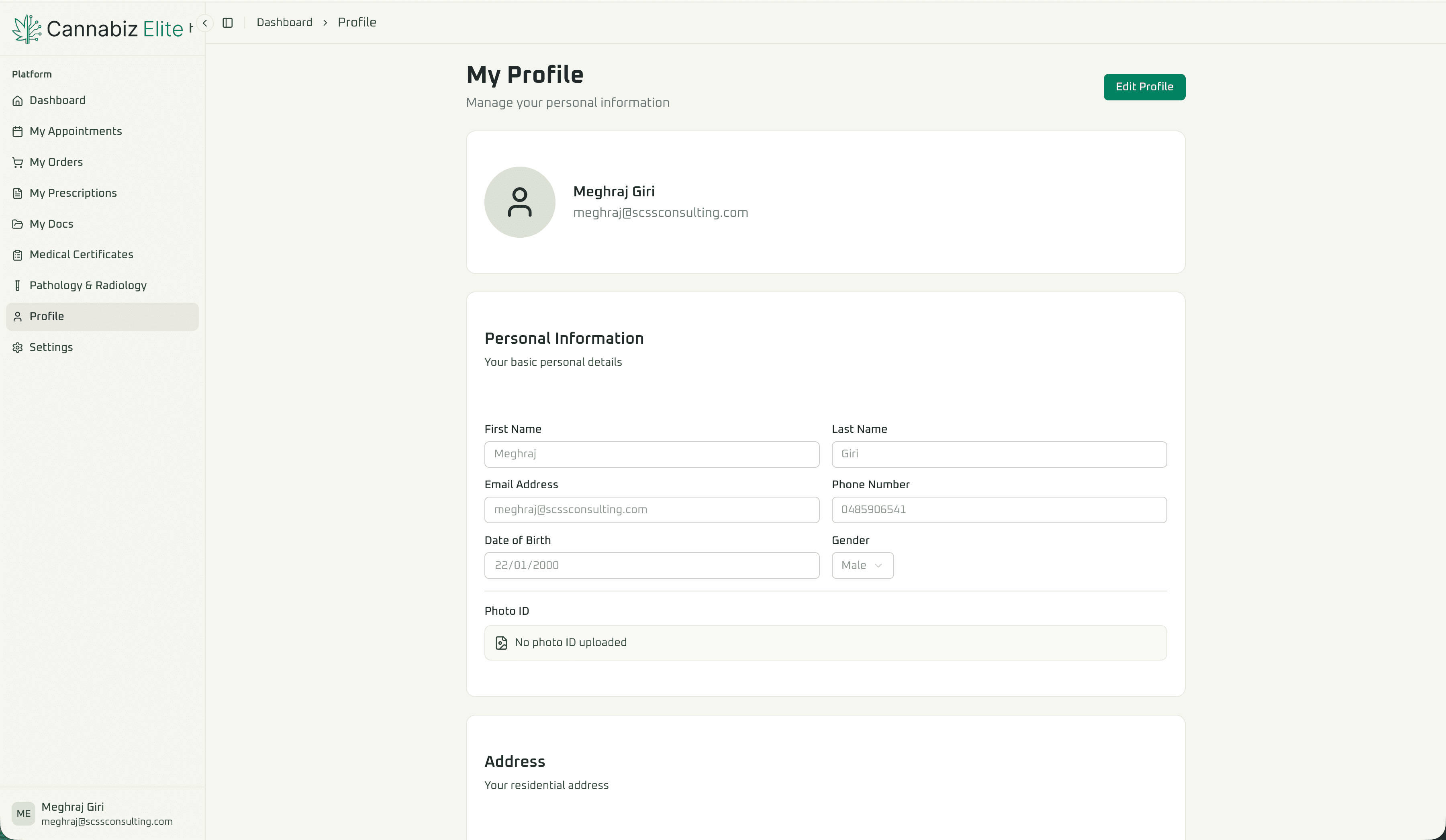
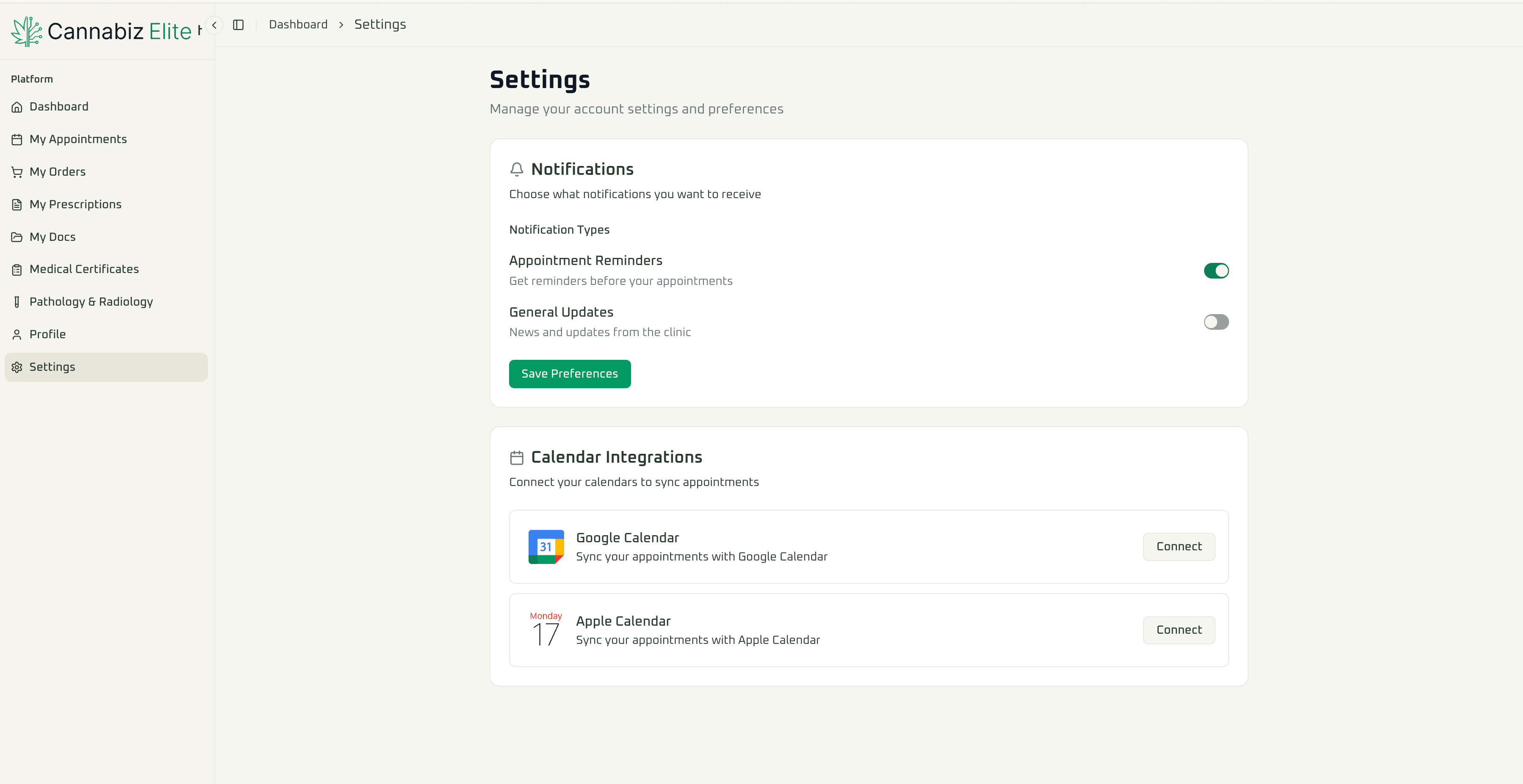
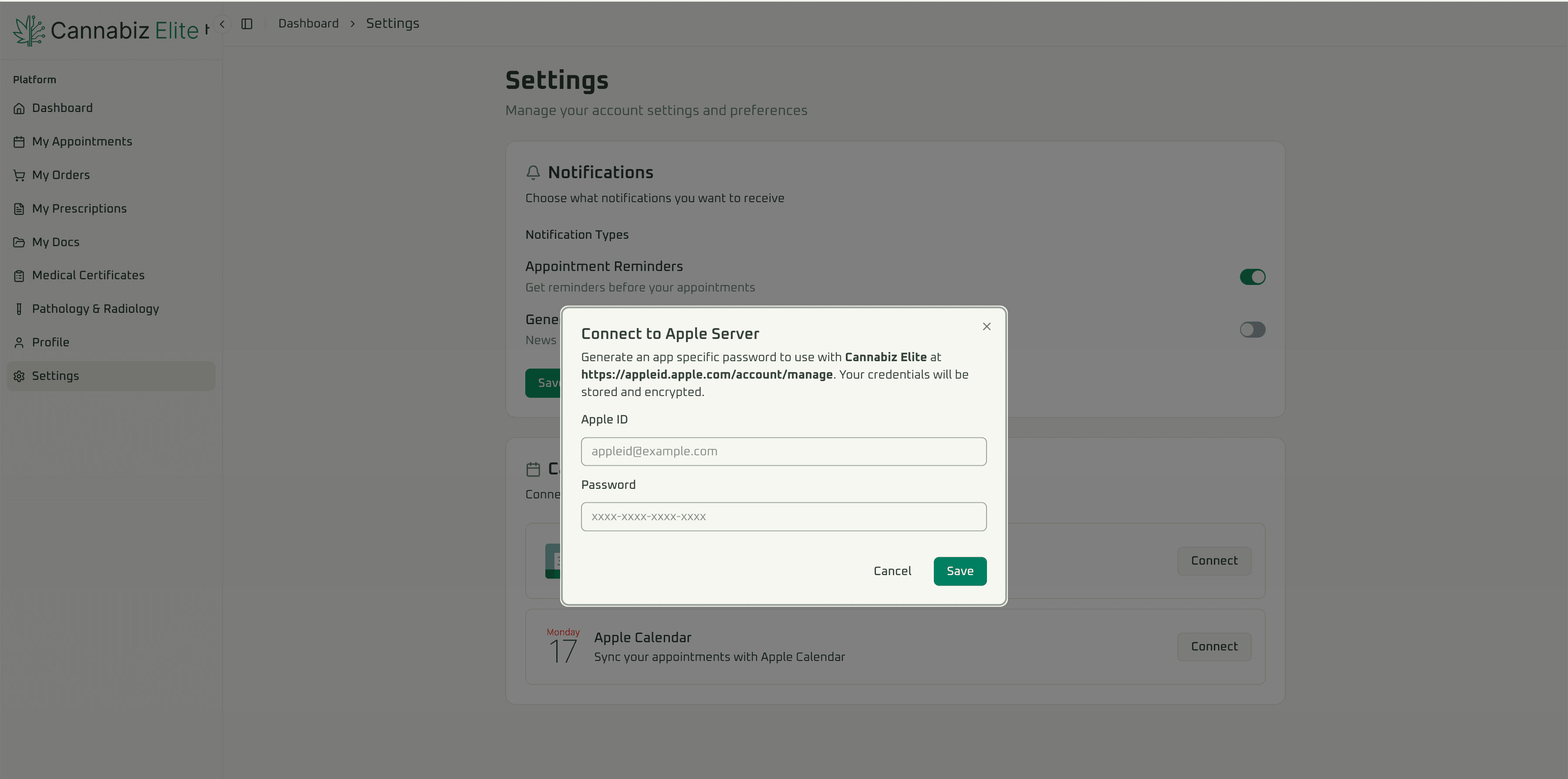
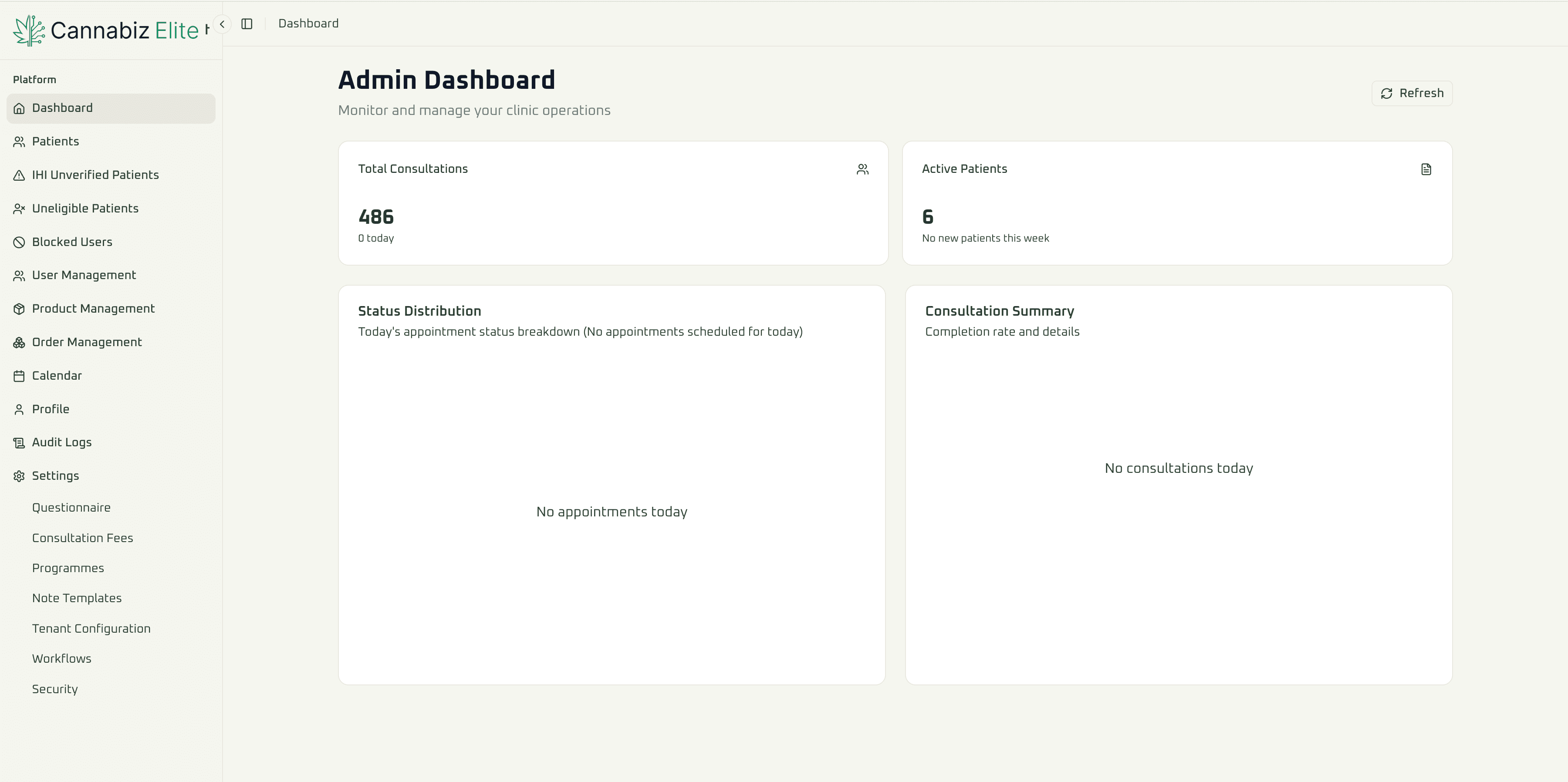
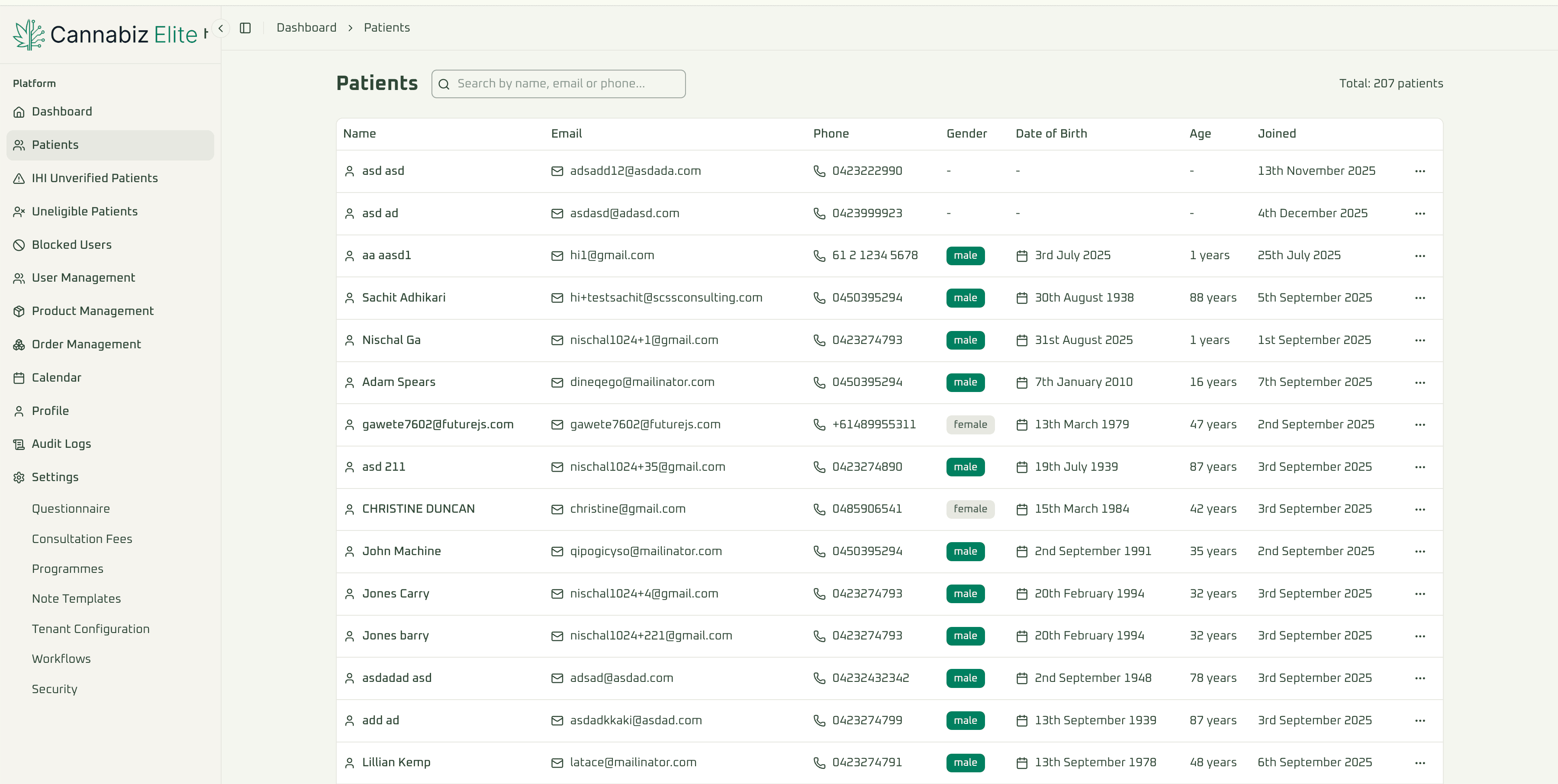
Six things a clinic would otherwise buy separately: patient self-scheduling, built-in telehealth, prescription creation and tracking, a patient portal for viewing scripts and ordering against them, a commerce engine that understands intervals, limits and repeats, and a pharmacy portal giving fulfilment partners live order visibility.
The path is booking to consultation to script to purchase without the patient changing tool, with reminders before a script expires. Audit logs, encryption and 2FA are part of the platform rather than added later, because a clinical system is asked to prove who saw what.
What I owned
I worked on this as a full stack developer at SCSS Consulting, across the Next.js front end and the Node and PostgreSQL services behind it.
My main piece was the integration with Parchment, the prescription portal, along with the back-end APIs it runs through. I also built the shared component library the clinic-facing screens are assembled from, which took roughly 40% off the time a new screen costs.
Constraints
This is regulated healthcare in Australia, and the rules set the shape of the software rather than decorating it.
Prescribing is restricted to authorised prescribers, patient data sits under Australian privacy legislation, and a prescription is a clinical record with an audit trail rather than a line item. The practical effect is that access is a legal question before it is a product one: who may see a script, who may act on it, and what the system can prove about both.
Where the abstraction breaks
The commerce engine is built on Medusa v2, which is a good fit for most of what a clinic storefront does — a catalogue, carts, orders, fulfilment — right up until it is not.
A prescription is not a product. It requires an authorised prescriber, it cannot be freely reordered, it expires, and it carries a clinical audit trail no cart abstraction provides. Every one of those is a place where the obvious e-commerce behaviour is the wrong behaviour: an "add to cart" that would let anyone buy, a "buy again" that would bypass the prescriber, a quantity field with no notion of an interval.
The work is largely in deciding where the commerce model still holds and where it has to be constrained — keeping the parts that genuinely are a storefront, and refusing the defaults everywhere a script is involved.
Technologies
Key Highlights
- Parchment
- Privacy Act & AHPRA
- Clerk Auth
- Product Management
A look inside